Updates
Dr. Martin Luther King Jr: The Intersections Between Equality, Justice, and Food
January 19, 2026
Published by: Nora Thomas
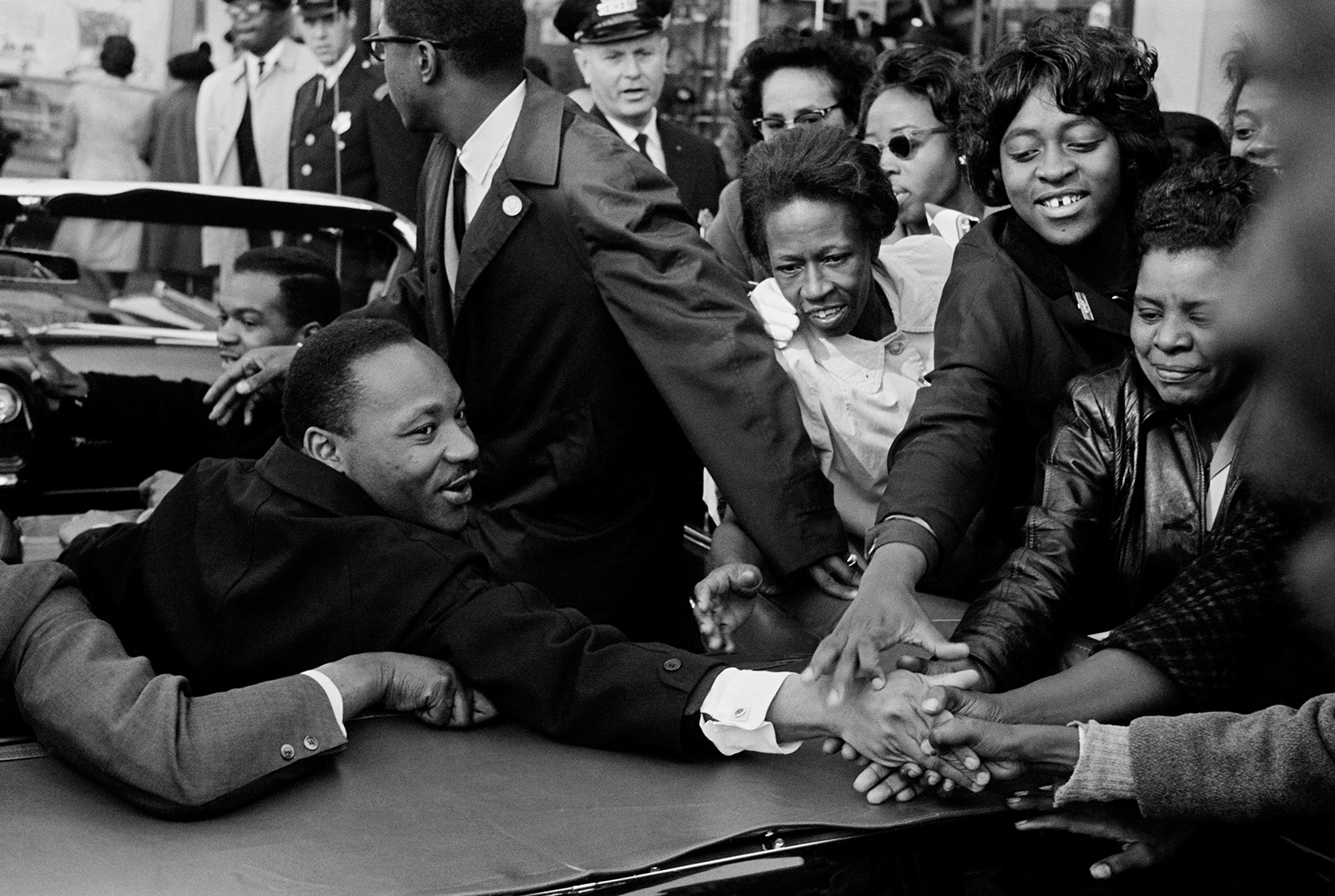
Today, we celebrate Dr. Martin Luther King Jr., a champion of social justice who spent his life advocating for racial and economic equality.
Dr. King believed in peaceful, non-violent protests in pursuit of justice. The Montgomery Bus Boycott, led by King, led to the outlawing of bus segregation in 1956. Dr. King later won the Nobel Peace Prize for his work. He worked tirelessly to end racial injustice and discrimination, and fought for broader ideals of equality and belonging. He acknowledged that equality cannot truly be achieved while poverty and hunger persist.

In 1957, along with several other activists, Dr. Martin Luther King Jr. founded the Southern Christian Leadership Council (SCLC) to coordinate protests and unite the movement. This group planned many successful activist movements, including the Poor People’s Campaign. King and his colleagues organized a march, the Poor People’s Campaign, to advocate for economic equality. African Americans had gained the right to vote in 1965. However, King believed the economic barriers were too great to achieve true equality. They protested for jobs, fair wages, unemployment insurance, and education.
Let us march on poverty until no American parent has to skip a meal so that their children may eat. March on poverty until no starved man walks the streets of our cities and towns in search of jobs that do not exist.
– Dr. King, at the end of the march from Selma to Montgomery, 1965

Poverty and food access are deeply intertwined, and Dr. King spoke out against the government policies and priorities that allowed hunger to persist. The Poor People’s campaign centered on economic injustice, and the idea that everyone has the right to a roof over their head, clothes on their body, and food in their belly.
Why should there be hunger and deprivation in any land, in any city, at any table, when man has the resources and the scientific know-how to provide all mankind with the basic necessities of life? There is no deficit in human resources. The deficit is in human will.
We spend millions of dollars a day in our country to store surplus food…I know where we can store food free of charge – in the wrinkled stomachs of the millions of God’s children in Asia and Africa, in South America, and in our own nation who go to bed hungry at night.
-Dr. Martin Luther King Jr.
Martin Luther King Jr. was assassinated on April 4th, 1968, 38 days before the planned march. Despite this tragic event, the campaign persevered. Participants built a settlement on the National Mall in Washington DC, referred to as Resurrection City.

Demonstrators stayed on the Mall for 42 days, leaving only to make demands to government officials for economic justice. Their commitment to the cause never faltered, but they were ultimately removed by police when their permit expired. Although he didn’t live to see the impacts, the campaign started by Dr. King led to 200 counties qualifying for free surplus food distribution, and many federal agencies pledged to hire poor people to help run assistance programs. Furthermore, the presence of thousands in DC, despite the absence of their leader, demonstrated the inspiration that Dr. King had sparked in so many.

Dr. King’s impacts continued far after his passing. At the SCLC, Reverend Ralph Abernathy stepped up to the role of president and visited the US Department of Agriculture (USDA) shortly after King’s assassination. Abernathy echoed King’s voice that hunger was a moral failure in a country as wealthy as the United States. This meeting laid the groundwork for many assistance programs that exist today, such as no-cost food stamps and free and reduced lunch for school children.
Today, we also acknowledge that, 57 years after his passing, we are still far from the dream Dr. King imagined.
Hunger and poverty persist in the United States, and both are deeply shaped by systemic racism. People of color continue to be disproportionately impacted. Based on the 2024 Household Food Security Report, 24.4% of Black households were food insecure, in comparison to the 13.7% national average, and the 10.1% reported by white households. For reference, Black people make up 14.4% of the total US population. Based on this data, Black families are more than twice as likely to experience food insecurity as white families.
Food insecurity is often framed as an individual failure. Yet, as Dr. King emphasized in his speeches, systemic injustice plays a profound role. Not everyone is set up with the same opportunities in life, but everyone deserves the fundamental right to food.
Food justice issues go beyond access, as well. In his meeting with the USDA, Abernathy argued for more support for farmers of color and criticized the government for rewarding large commercial farms. In 1920, Black-owned farms accounted for 15% of all farms. Now, they hold less than 2% of the total.
Dr. Martin Luther King Jr’s legacy carries on today in what he established for racial and economic equality. His story also inspires us to stand up for what’s right, pursue a world where all are equal, and do so peacefully. We admire the major feats of Dr. Martin Luther King Jr. and fellow activists, and we acknowledge that the fight isn’t over.
Make a career of humanity. Commit yourself to the noble struggle for equal rights. You will make a better person of yourself, a greater nation of your country, and a finer world to live in.
-Dr. Martin Luther King Jr.
- Volunteer to support food access in your community. We Don’t Waste has plenty of opportunities for those in the Denver area.
- Continue reading and learning. Click here to see our favorite social justice and food justice books.
- Donate to the cause. Support organizations working towards social justice and food access.