Updates
What Does a Balanced Plate Really Look Like?
November 9, 2026
Published by: Hayley Shaw
What does a “healthy meal” actually entail?
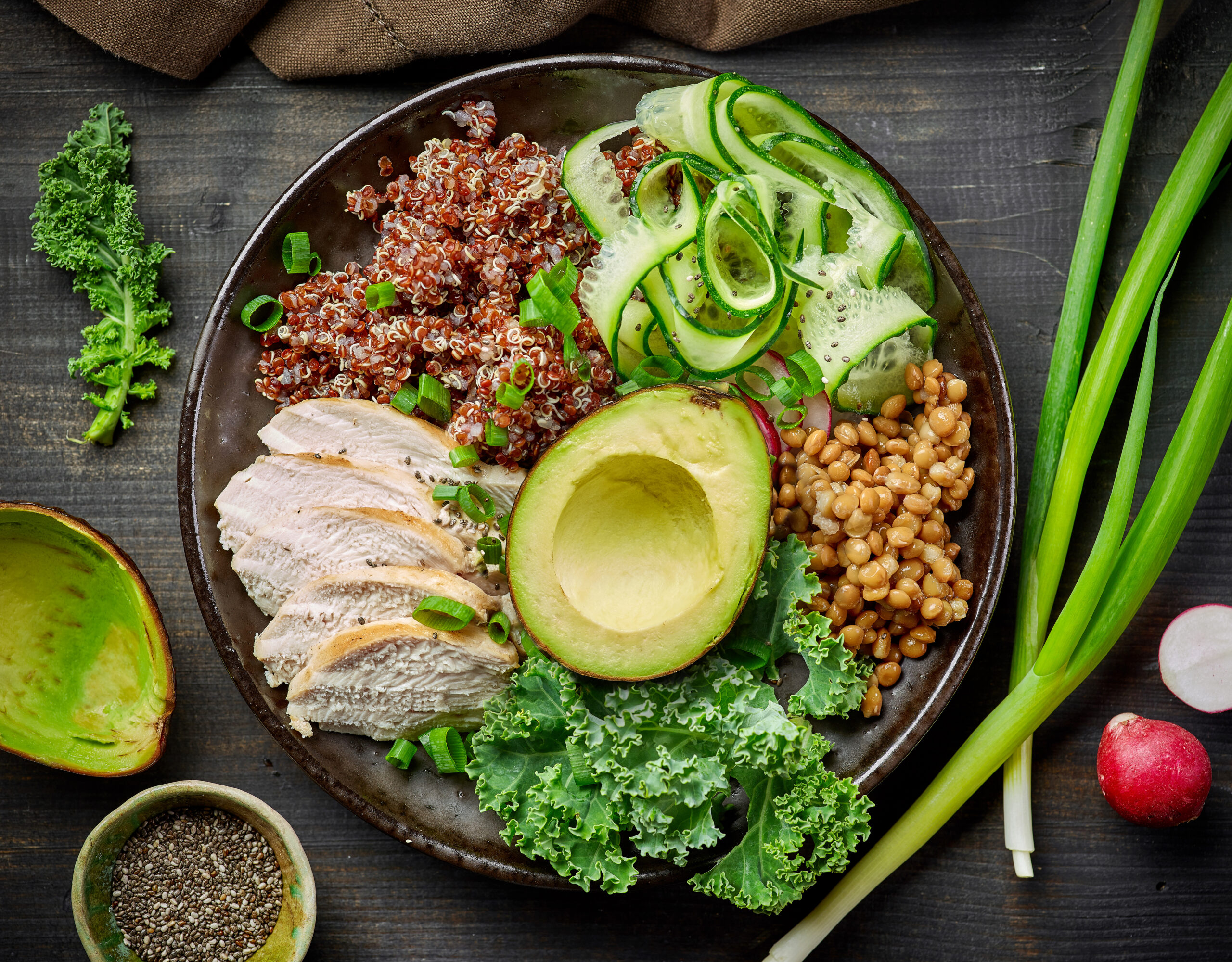
Picture the ideal, healthy meal. Some people picture a perfectly arranged plate of grilled salmon, quinoa, organic vegetables, and fresh berries when they think of a balanced meal. Sounds expensive, doesn’t it? But building a nutritious meal does not require expensive ingredients, specialty foods, or a perfect plate. A nutritious meal can be as simple and cost-effective as a balanced plate. A balanced plate is simply a way to bring together different foods that provide the energy, protein, vitamins, minerals, and fiber our bodies need.
The 2025–2030 Dietary Guidelines for Americans emphasize vegetables, fruits, whole grains, protein-rich foods, and dairy as part of a healthy dietary pattern. But there are many ways to put those recommendations into practice, and a balanced meal can look different from one family, culture, or kitchen to the next.
Thinking in Food Groups
What about macros? The word “macros” has been thrown around on the internet the last few years. It’s short for “macronutrients,” which include the 3 main food groups your balanced plate should focus on: protein, carbohydrates, and fats. Macros aside, we can’t forget fiber. So, one simple way to think about a balanced plate is to include these 4 things:
- Protein foods such as beans, lentils, eggs, peanut butter, nuts, seeds, tofu, chicken, fish, yogurt, or other dairy foods.
- Grains and other carbohydrate-rich foods such as oats, rice, potatoes, quinoa, tortillas, pasta, or whole-grain bread.
- Carbohydrates include sugars, starch, and fiber. These provide the main source of energy for the body and brain and are the “easiest source of energy for every cell in your body to use.”
- Fiber is also crucial for digestive health and balancing cholesterol, a substance that impacts our heart health.
- Vegetables and fruits
- These provide the body with fiber, vitamins, minerals, and beneficial plant compounds.
- Eaten in variety, fruits and veggies lower blood pressure, aid digestion, balance blood sugar, and reduce the risk of heart disease and stroke.
- Healthy fats such as nuts, seeds, olive oil, and avocado oil
- Our bodies need fats in order to absorb and store key vitamins.
- They can help lower blood sugar, lower blood pressure, and reduce inflammation.
- They also play a critical role in balancing our good (HDL) cholesterol and bad (LDL) cholesterol, lowering the risk of heart disease.

While we can try to assemble meals with all the food groups, it does not mean every meal will (or needs to) contain every food group in exactly the same proportion.
The goal is not to make every plate perfect. It is to build a varied eating pattern over time.
One visual that can make this concept easier to understand is Canada’s Food Guide plate. The Canadian model divides a plate into roughly half vegetables and fruits, one-quarter whole grain foods, and one-quarter protein foods. It also emphasizes that the foods shown are examples and that healthy choices can be fresh, frozen, canned, or dried.
For We Don’t Waste, an organization serving all communities, this flexibility is important. A balanced plate does not have to look exactly the same every day—or even look like a traditional “plate” at all.

You can build a balanced plate by asking yourself three questions:
- Where are the protein sources?
- Where are the grains or other carbohydrates?
- Where are the fruits or vegetables?
Why Variety Matters: More Than Just Vitamins
Fruits and vegetables are often described as sources of vitamins and minerals, and they certainly are. But their benefits go far beyond a list of individual nutrients.
Plants contain hundreds of naturally occurring compounds called phytochemicals, including carotenoids, flavonoids, and polyphenols. Different plants contain different combinations of these compounds, which is one reason eating a variety of fruits and vegetables matters. (We all have favorites, but diversifying your fruits and veggies can help you eat more balanced).
Think about the difference between a carrot, a tomato, a blueberry, and spinach. Each provides a different combination of nutrients and plant compounds, some of which are associated with the food’s color.

Carrots and sweet potatoes are rich in beta-carotene, which the body can convert to vitamin A. Citrus fruits, strawberries, broccoli, and peppers provide vitamin C. Dark leafy greens provide folate, vitamin K, and other nutrients. Nuts and seeds can provide vitamin E and minerals such as magnesium. Beans and other legumes provide fiber, folate, potassium, and protein.
Eating an array of foods makes it more likely we get a wider range of nutrients rather than relying heavily on just a few. This is why we’ve all heard, “eat the rainbow!” This is because individual foods work together in what’s called the “food matrix,” which provides a unique set of vitamins and minerals that are most bioavailable for our body to absorb. So the more colorful the plate, the more variety there likely is, and therefore lots of nutrients.
Fresh Isn’t The Only Option
When we picture a nutritious plate, we often picture fresh produce. But fresh isn’t the only way to eat well, and fresh produce isn’t always accessible. Frozen, canned, or dried items will give you all the nutrients you need without breaking the bank. The USDA and Canada’s Food Guide both recognize that nutritious foods can come in different forms, including fresh, frozen, canned, and dried.

Frozen and canned vegetables can last for months and provide an inexpensive source of protein and fiber without requiring hours of preparation. Plus, these items have a much longer shelf life than fresh foods and can help reduce waste at home.
Did you know that frozen and canned vegetables can actually be even more nutritious than fresh? Vegetables have their highest nutrient content right after being picked, and it slowly decreases as they ripen. Once fresh veggies travel to the grocery store and sit a few days on your kitchen counter, they lose some nutrients. Frozen and canned veggies, however, are processed and preserved at peak ripeness, maintaining the high nutrition.
A balanced plate does not depend on having access to a farmers market every week. It depends on prioritizing the options available to you.
Variety, Not Perfection
Some days, a meal won’t look like a textbook balanced plate.
Maybe dinner is a bowl of pasta; breakfast is toast and a banana. Maybe the only vegetables available are canned. Maybe a favorite family meal does not fit neatly into three sections on a plate. Healthy eating is about the overall pattern, not whether every individual meal checks every box. Sometimes it is easier to think about variety across a week, instead of per meal. Instead of asking, “Did I eat perfectly today?” try asking:
- Did I eat a variety of foods?
- Did I include some fruits or vegetables?
- Did I consume sources of protein?
- Did I include foods that provide fiber, vitamins, and minerals?
- What could I add to my next meal?
Remember, a balanced plate is not about expensive ingredients, rigid rules, or getting everything right at every meal. Images like the Canadian Food Guide provide merely a visual representation of balance and recommended proportions for a healthy diet. It doesn’t mean every meal we have will look like that plate.
It is about making the most of the foods available, choosing variety when possible, and building meals that nourish our bodies over time. And sometimes, the most balanced choice is simply the food that is available, accessible, and shared around the table.