• About
    • How It Works
    • FAQ
    • Our Staff & Board
  • What We Do
    • Overview
    • Food Recovery
    • Partner Distribution
    • Mobile Markets
    • Education & Engagement
  • Get Involved
    • Overview
    • Fundraise for We Don’t Waste
    • Volunteer
    • Events
    • Corporate Partnership
    • Advocacy
    • Cooking with We Don’t Waste
    • At-Home Food Waste Audit
    • Careers
    • Support Us
    • Contact Us
  • The Feed
  • Find Food
Donate
  • Donate Now
  • Monthly Giving
  • Other Ways to Support Our Work
Donate
  • Donate Now
  • Monthly Giving
  • Other Ways to Support Our Work

The Feed

Updates

Food & Your Mood: How Eating Makes Us Happy

Read More May 15, 2023

You can probably think of one memory in which you had an incredible meal, whether it was a holiday or during your last birthday celebration, that was so delicious it made you feel a physical sense of happiness. The joy bubbled up to the surface and you exclaimed that this was the best meal you had ever had, a smile on your face and crumbs on your cheek. 

As it turns out, food really does make us happy, chemically, and increasing evidence shows that good food (your leafy green veggies, unsaturated fats, fruits, etc.) improves long-term mental health outcomes on top of physical health indicators. We can see that hormones and neurotransmitters like serotonin and dopamine are being released in the body to reward you for enjoying a healthy meal, and even the trillions of microorganisms living in your gut microbiome communicate with your brain through neural, inflammatory, and hormonal signals to let you know that you made a healthy choice. 

So what is good food? Our diets change across cultures, age, and even fluctuate periodically depending on health, access, and finances, so understanding what diet is good for one person at one point in time is probably not the same good for another person. This is why variety and moderation are always key (and why you shouldn’t stress too much about having the perfect diet; there is no such thing)! 

While you might experience that instant burst of satisfaction from a really good bar of chocolate, or while indulging in a burger from your favorite fast-food restaurant, these types of high glycemic-index foods aren’t going to make you happier in the long run. Research shows that consuming more fruits and vegetables, as well as foods high in fatty acids (like salmon), regularly increases mental well-being over the course of a year. This was shown to be the case regardless of age, sex, or race. 

One diet, in particular, has been the focus of studies between mental health and food: the Mediterranean diet. It consists of high consumption of fruits, vegetables, nuts, and legumes; moderate consumption of poultry, eggs, and dairy products; and only occasional consumption of red meat. Current research suggests this diet is tied to a reduced risk of depression. 

When eating “healthy” foods as opposed to unhealthy foods, your brain responds to the nutrients you’re ingesting by releasing neurotransmitters like dopamine, serotonin, GABA, and more, all of which help with mood regulation, sleep aid, and reducing the physical reaction of anxiety. By more regularly eating these foods, you’re helping to regulate your body’s physical reactions that can exacerbate anxiety, fatigue, and depression. 

But here’s the good news for those of us with an insatiable sweet tooth: second to fruits and vegetables, eating “unhealthy” foods such as sweets are shown to increase happiness while eating them. So for long-term health impacts, fruits, and vegetables are still undefeated, but for that instant mood boost, your favorite treats are still the way to go. 

A more recent discovery was that overall mental health benefited equally from snacks and meals! It was previously assumed that a larger meal, like dinner, would have more of an impact, but your brain and your stomach is just happy to be eating, whether it’s an afternoon snack or a meal. 

There are certain patterns that have been shown to hinder your happiness. What is referred to as the “Western Diet”, or a high-calorie diet with lots of saturated fats and added sugars, has had evidence that shows detrimental long-term effects on brain health, including cognitive decline, memory dysfunction, and increased likelihood of depression and anxiety. None of these outcomes could be caused by poor diet alone (so don’t swear off McDonald’s just yet), but it reinforces the importance of the choices we make, or are forced upon us, when looking for our next meal. 

What’s even worse for our brains and bodies than a poor diet is a restricted diet. Whether intentional or not, not providing your body with enough calories or nutrients will just create long-term damage to the body’s functioning. The severity of the effects on development from lack of nutrition is most notable in children, and food insecurity can lead to poor academic/cognitive performance, on top of stunted physical development. 

That doesn’t leave adults out of the conversation by any means though. Not having consistent access to nutrition puts people at an intensely increased risk for mental health difficulties, with a 257% higher risk for anxiety, and 253% higher risk for depression. These numbers make perfect sense. When the body isn’t fueled with proper nutrition, of course someone will spend more time concerned about where their next meal is coming from, or find difficulty finding motivation. There’s an interesting cycle that develops here. A study found that people with serious mental health struggles were 5x as likely to be in a household experiencing food insecurity. Those same adults are less likely to be connected to and to use support or treatment services. 

So what can we learn from all of this? Food access is necessary, not just for physical well-being, but for mental health as well. If a person doesn’t have access to affordable, nutritious food, or even just enough food, it impacts every aspect of their life. Financial restrictions limiting a diet to only the affordable, “unhealthy” foods available at a corner store prevent a person from taking agency over their food choices and their own mental and physical health, and the repercussions can last a lifetime. 

We can see this vicious cycle between food insecurity and one’s mental health. A cycle that could be reduced by improving access to nutrition. That’s where we come in. We Don’t Waste is working toward breaking down that vicious cycle. 

Donate to Support Food Access
Volunteer (it’s fun!)

Supporting food access is an easy and rewarding way to give back to your community. Get involved with local food banks, community meal centers, and food-recovery organizations. We Don’t Waste creates food access for hundreds of thousands of individuals in the Denver metro area. Volunteer to help distribute food at a Mobile Food Market, or make a donation to We Don’t Waste to support Denver’s largest food-recovery organization and over 110 nonprofit organizations providing free, nutritious food to vulnerable communities. 

Professionals should be consulted in the case of chronic mental illness. It is encouraging to see evidence that nutritious food and a balanced diet can help create a more positive context for supporting mental health, but good food alone is not a cure. If you are experiencing a mental health crisis or need additional support, please call or text 988.

Updates

How Mobile Food Markets are Evolving to Fight Increased Food Insecurity

Read More April 11, 2023

Published April 11th, 2023. Sam Talarczyk, Director of Operations

Food insecurity is on the rise, and We Don’t Waste is utilizing our Mobile Food Markets as a way to create instant food access in neighborhoods around Denver. As the local need for food access increases due to recent SNAP benefit reductions, and record levels of inflation on food, our Mobile Food Markets have been growing and evolving to better serve our neighbors in need. 

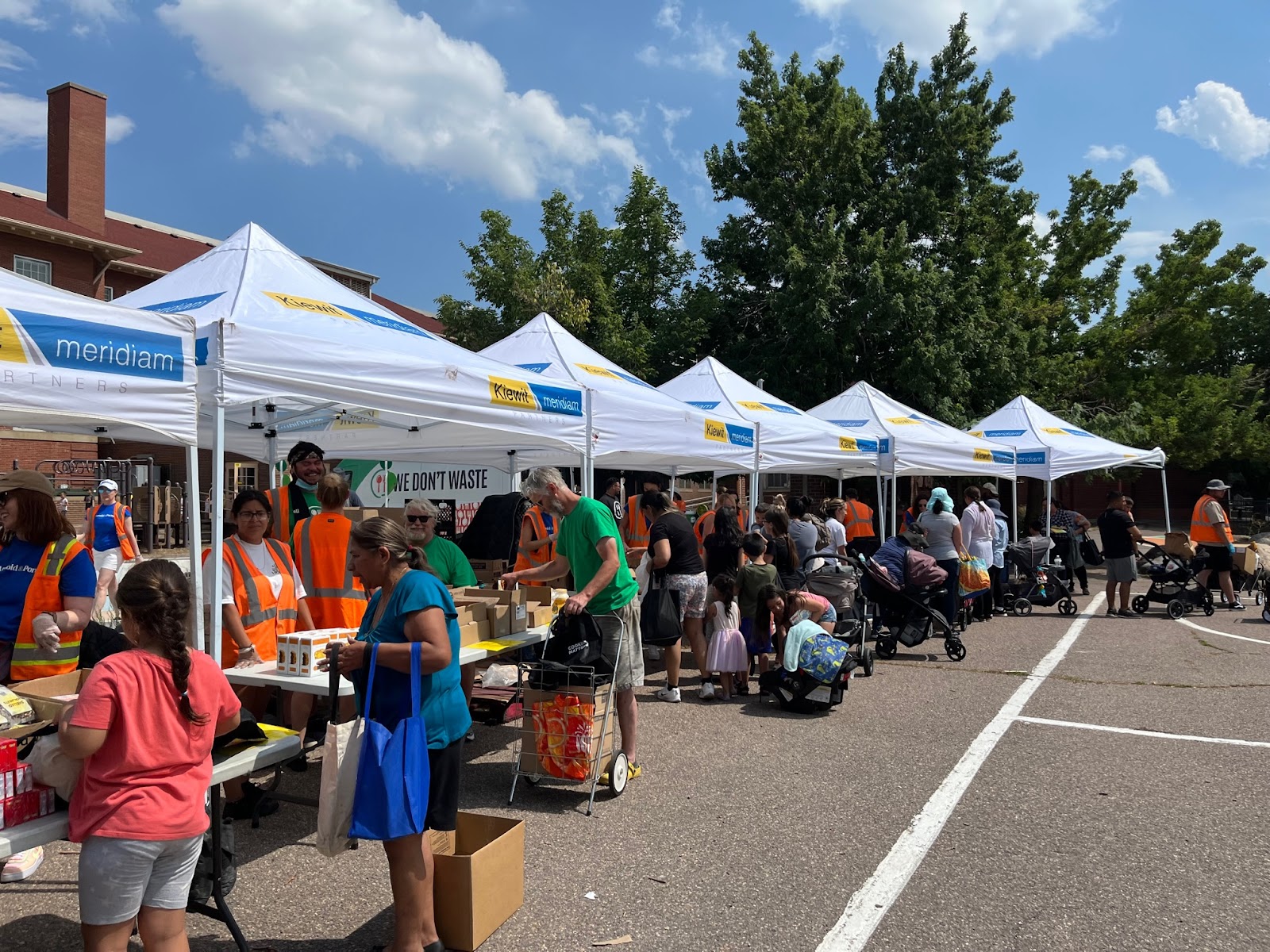
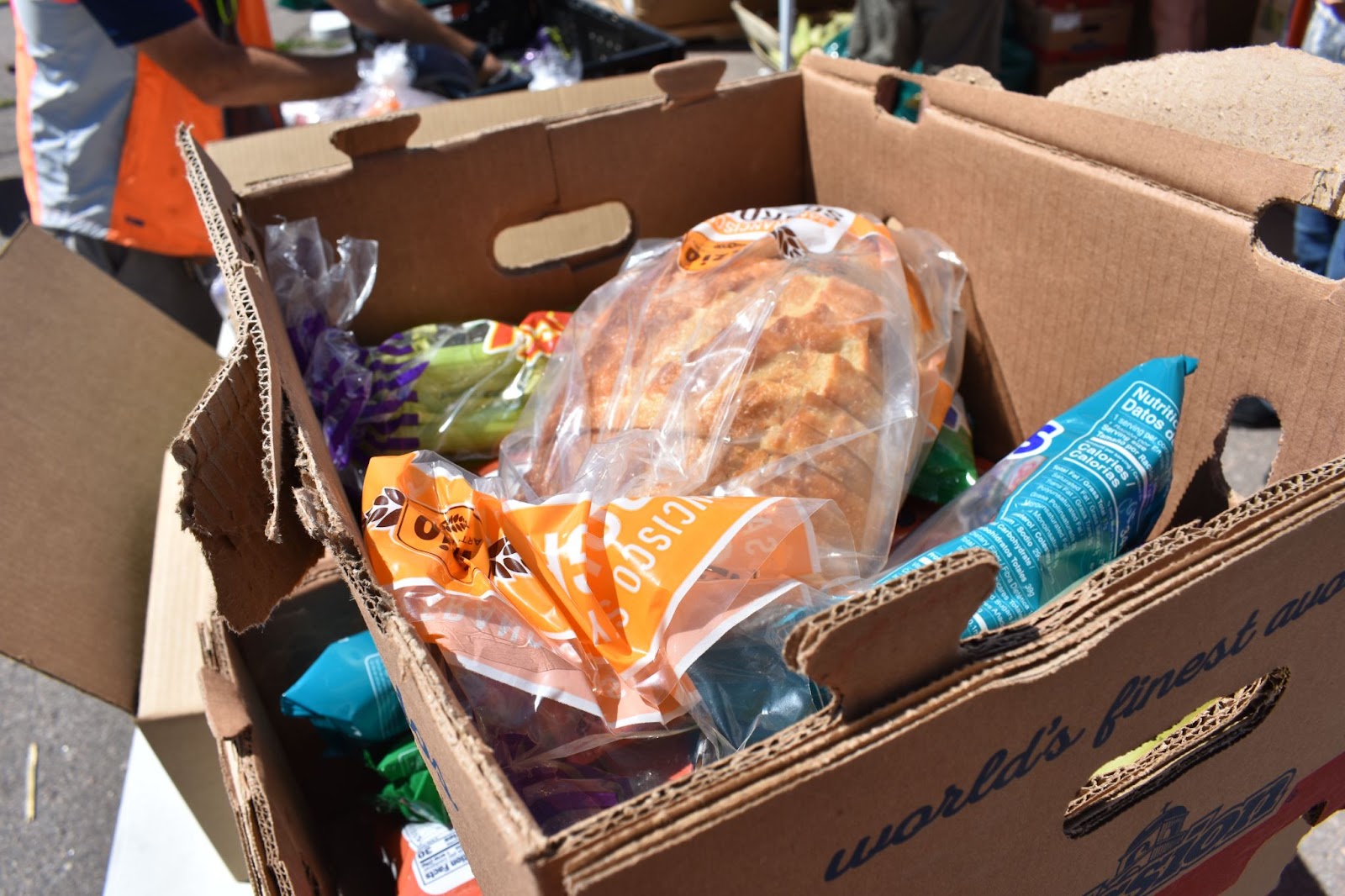
Mobile Food Markets are free, pop-up farmers markets, operating in food deserts around Denver, and the food supplied has been recovered from various segments of the food industry. The markets run around 8 times a month in rotating neighborhoods and provide families and individuals with limited food access a way to bring home fruits, vegetables, meat, and more at no cost. By utilizing recovered food, we are preventing waste in our landfills, and creating meals from quality food that otherwise would have needlessly been thrown away. 

Up to 40% of all food produced in the U.S. ends up in a landfill, and with much of that being edible, it creates an opportunity to repurpose these overages and immediately generate increased food access. 

There exists an unparalleled urgency in redistributing this food as Mobile Food Market attendance is up 63% from this time last year. This is about 10,000 individuals a month. With an even more significant reduction in benefits, the senior demographic has increased attendance by 93%. 

In order to support increasing turnout to these Mobile Food Markets, we’re adapting our programs to better support our community. 

  1. We’re increasing the amount of food available at each market.

This is perhaps the most simple, yet most important element of how we are evolving our markets. Each individual checked into the market likely represents a household of 4 or more, so the increase in attendance results in an exponential output of food. We’re onboarding new food donors, expanding our relationships with current partners, and doing so as quickly as we can. 

If you or someone you know is involved in the food industry in any capacity and would like to help create food access, please contact our Food Acquisition Specialist at Food@wedontwaste.org to learn how to become involved as a food donor. 

  1. We’re working with local partners to provide additional resources and information on free programs in the Denver area.

Food insecurity is often the result of financial difficulty, which can mean that other necessities may be difficult to come by as well. By providing additional access to resources, like through our nonprofit partner WeeCycle, the Mobile Food Markets become a more well-rounded program able to support the whole family. From toothbrushes or reduced-cost healthcare to infant formula, We Don’t Waste’s Markets have become a one-stop shop for essentials. 

  1. We’re identifying new Market locations and increasing the total number of Markets in a month.

There are over 50 food deserts in Denver, which means there are many avenues to pursue in terms of new locations. Part of the method going into identifying these new spots is looking at the food desert neighborhoods that are not currently served by We Don’t Waste or other nonprofits in the area. We are finding neighborhoods in which there may be limited access to nonprofit support, which would make the Mobile Food Markets even more effective. After locating potential areas, we look at local organizations or schools to partner with in order to have consistent access to space to create these markets. 

  1. We’re transitioning back to walk-up style Markets and creating accessibility options.

After creating drive-thru markets to accommodate pandemic safety requirements, we are moving the markets back to walk-ups, as you would imagine for a traditional farmer’s market. The walk-thru style is safe, fast, better for the environment, and offers more choice to participants, but it also presents its own unique challenges in terms of accessibility. 

Our team is currently expanding available accessibility options, making it easier for those with limited mobility to participate comfortably. From grocery carts and a market walk-thru buddy system to a hotline specifically for questions about accessing markets, our goal is that everyone will have equal access to get the food they want. 

  1. We’re advocating for change on a local and national level. 

The issues of food insecurity and food access might not be something you see on billboards every day, but they are issues that frequently appear on ballots on both a state and national level. We inform our community about the issues as they arise, and how they can vote to protect and expand food access. Creating systemic change is one of the most effective ways to prevent surges in food insecurity like the one we are currently experiencing, and all it takes is informed voters from our community of volunteers, market participants, and neighborhood partners. 

One of the recent examples is the bill SB22-087, Healthy Meals For All Public School Students. With this bill passing, public school students will now be guaranteed access to at least two meals a day in participating school districts, helping to potentially alleviate food insecurity for millions of children. 
You and/or your company can help provide the lifeline of food during this surge in need for food access; contact our team to learn how you can get involved with We Don’t Waste.

Updates

Celebrating Earth Month— Upcoming Events, Volunteer Opportunities, and More!

Read More March 29, 2023

Taking care of our environment is a necessity as stewards of our planet, and it is up to all of us to protect and to celebrate the natural world. Earth month is a perfect time to reflect on all of the beauty we’re surrounded by in our beautiful state of Colorado, and to get our hands dirty and give back to mother earth. 

Here are some things you can do right now to celebrate the planet. 

  1. Try an At-Home Food Waste Audit. 

Our Education & Engagement team put together a free curriculum for you to try to reduce food waste at home! In three weeks you can learn how to cook with less waste, store food correctly (yes, this is more difficult than you might think), and how to prep your kitchen to create less waste before you do your next grocery run. 

The benefits are twofold: you end up saving money on food that doesn’t go to waste, and by preventing good food from ending up in our landfills you are preventing methane and CO2 emissions! You’re sold now, right?

Learn More About the At-Home Food Waste Audit
  1. Register to Vote for our Planet 

One of the ways you can make a huge impact with minimal effort is to make sure that you vote! Check to see if you’re registered here. If you want to learn about legislation We Don’t Waste is supporting, check out our advocacy page here, and make your voice heard!

  1. Share your knowledge with the world!

Let the world know you care! It is important to share your care for the planet with others and to rub off your good habits on them. In the age of the internet, information overload is a part of our daily lives, but your friends and family are likely to trust you as a source of information. Share posts on social about the environmental issues you care about. Talk about how you’ll be voting at brunch with friends. Habits like these help others to understand that they aren’t alone in caring, and can create a community-wide ripple effect of change. 

  1. Support We Don’t Waste

Caring for the planet through food waste reduction is intrinsically a part of We Don’t Waste’s work. Every serving of food on a plate means fewer emissions in our atmosphere. Sign up for an upcoming volunteer shift, make a donation, and watch your gift lead to changed lives and a healthier planet.

  1. Go for walk

We’re not kidding! Get up, find a park nearby, go for a walk and take a deep breath. If it’s not too cold out, take your shoes off and walk around barefoot. You’re doing the hard work of protecting our beautiful green and blue planet, you should reap the rewards too! 

  1. Attend an Earth-Centric Event

Here are some community events coming up that we think you’ll enjoy. There are a variety of options, including some family-friendly focused fun! Earth month is a celebration for everyone after all! 

  • Saturday, April 15th, Celebrate Earth Day with fun activities for young families with Denver Public Libraries. You’ll create STEM challenges with recycled materials, do upcycled crafts, learn about seeds and all the things that make earth beautiful. Ideal for families with children ages 5-12, all are welcome. 
  • Sunday April 16th, enjoy Family FUNday Arbor Day Celebration with Girl Scout’s Dreamlab. Adopt your own Blue Spruce, and participate in fun games and crafts. 
  • Friday, April 21st, Watch the Screening of the Short Film, Suncor Sundown at Patagonia, hosted by Cultivando, CO Thrives Coalition, Spirit of the Sun, and Womxn From the Mountain.
  • Saturday, April 22nd, Participate in LoDo Cares 2023 Earth Day Clean Up and help pick up litter and create a cleaner Denver with other members of the community. 
  • Saturday April 22nd, Seed Swap & Earth Day Celebration with Broomfield Libraries. There will be Earth Day activities for all ages, including bilingual eco-themed storytime!
  • Saturday, April 22nd, join the River Cleanup In Goldstrike Park in Arvada hosted by Ball. Clear Creek Cleanup followed by an after-party with giveaways, food, and free beer. 
  • Saturday April 22nd, Protect the Park Cleanup by the City of Louisville.  Join City of Louisville Open Space staff digging up non-native plants to help reduce their impact on native ecosystems.
  • Saturday and Sunday April 22nd-23rd, Plant some trees in Boulder with Yellow Barn Farm. Help plant a mixture of fruit, forage, and nurse trees that will help rehydrate the landscape, produce valuable forage for livestock, create habitat, and produce abundant food for humans.

That is only a small slice of the total events going on all month, so keep an eye out for more activities, volunteer opportunities, and celebrations! 

News & Events, Updates

Fungi & Food, The Future of Sustainability

Read More March 3, 2023

Fungi, mushrooms, mycelium, and food. Maybe you don’t associate all of these things together (or maybe you do, and you’re thinking of the terrifying reality of The Last of Us, currently airing on HBO), but the future of managing food waste and creating a more sustainable food system is intrinsically tied to fungi. Rest assured, fungi won’t be turning anyone into zombies any time soon, but they will be incorporated into more aspects of our food system. 

So why fungi? Not quite animal and not quite plant, fungi is an incredibly complex living system of threads connecting trees and foliage across miles and miles of land. It’s the communication network of the natural world, and vital in transferring nutrients across biomes and keeping soil viable. Fungi also produce a fruit, known as mushrooms. 

Edible mushrooms are a great source of iron, zinc, and vitamin B-12, and take little resource input for major nutritional output. They can’t replace meat entirely as a protein source, but fungi are a terrific choice to incorporate into any diet in regard to resource preservation. Not only are mushrooms great as a food, but soon they will be a great addition to your food. 

A food technology startup out of Israel, Mush Food, is adding fungi to meat in a 50/50 combination that preserves and enhances the flavors and texture of meat that carnivores crave while reducing the ecological footprint of meat in half. The product they are developing, 50CUT, effectively mimics the meat it is combined with, “Once you add 50CUT to ground beef, it acts like a sponge and absorbs all the water, juiciness, fat, aromatic compounds, and assumes the visual appearance of the beef. From the full organoleptic and nutritional perspectives, 50CUT functions as the perfect complement to beef, enhancing its taste.”

Leather made from Reishi mushrooms.

What about fungi’s ability to grow into predefined molds? It’s a resilient and malleable thing, so biotechnologist Akram Zamani and her team are using fungi to break down food waste and turn the result into something brand new! Food produces an immense amount of greenhouse gases when it rots in a landfill, and decomposing food makes up a majority of the product found in U.S. landfills. By utilizing the fungus Rhizopus delemar and stale bread crumbs, Zamani’s team was able to turn the gelatinous product into yarn to spin into fabrics and create synthetic leather.

The fungi are grown underground, using minimal land, energy, and water, and as you’ll read in a moment, using fungi’s incredible ability to grow into a mold, it grows to mimic the rich umami texture and flavor of its partnered beef. Sound weird? It is, but when this (eventually, give it a few years) hits the consumer market, give it a try! It’s a low-impact way to enjoy meat in a way that’s more natural than any of the other beef alternatives on the market. 

There is already one business on the market, Mycoworks, producing ready-to-buy product from fungi alternatives. From consumer reports, this vegan leather matches, if not exceeds, the quality and aesthetic of its competition. While mycelium (the threads of fungi that create the frame in which the vegan leather is made) won’t be replacing cows or plastic alternatives any time soon, the plant leather has made a splash with its incomparable production speed and sustainability. 

While We Don’t Waste works hard to recover local food excess, there is not much we can do about the bits and pieces of inedible food that slip through the cracks in your home or in your office. Imagine a future where food waste could be picked up, and turned not only into compost, but into clothing and furniture indistinguishable from its animal-borne or plastic counterparts. How exciting! Fewer greenhouse gas emissions from food in our landfills, and responsible, low-climate-impact items for use every day. Just from your food scraps!

As a food, mushrooms are an awesome addition to a diet, and as a tool, fungi are key in breaking down food waste and unsustainable production practices. It’s an exciting time in the growth and development in sustainable food system practices. 

Updates

SNAP benefits are getting slashed—here’s how you can help.

Read More February 24, 2023

The emergency allotments that came in tandem with the COVID-19 pandemic in 2020 are now coming to an end. The Consolidated Appropriations Act, a 2023 law recently passed by Congress, ends emergency allotments after the February 2023 issuance. This means by March 2023, all SNAP households’ benefits will return to pre-pandemic amounts, without the added supplement.

What does this mean for SNAP households in Colorado? In the coming months, there are going to be some major changes in the benefits received through SNAP and Social Security. The average household will be losing around $90 a month in SNAP benefits, with senior citizens on Social Security losing over $240 a month in SNAP benefits. 

The daily recommended minimum amount of money for food per individual in Colorado ranges from $11 to $13 depending on your preferred diet. For a household with limited income, this change will likely lead to skipped meals and detrimental nutrition and health outcomes.

The USDA recommends impacted families do the following:

  • If able to, households can roll over your SNAP benefits to the next month. This may help “cushion” the impact of the reduction in benefits. 
  • Stock up on non-perishable items now, while you have the additional benefits. Click on this link for tips on stocking your pantry: English; Spanish
  • Stretch your ingredients and plan to use them in more than one meal. This helps to save money and reduce food waste.  Click for more tips: English; Spanish
  • Consider freezing your produce to make fruit and vegetables last longer English; Spanish

What can YOU do to help? 

Make a gift to We Don’t Waste to help support increased food access across Colorado. In the last few months, We Don’t Waste has seen record numbers of attendance at each of our Mobile Food Markets, along with a significant waitlist for agency partners, and we anticipate we will be seeing a greater number of families in need of more support in the coming months. As such, we have plans to grow our market initiatives and food distribution efforts across the metro area. 

$25 provides over 160 meals through We Don’t Waste’s food distribution. Your gift is maximized to provide as much nutritious food as possible to vulnerable communities. 

Make a Donation

Make an even greater impact by becoming a monthly donor. By doing so, you sustain our programs and allow We Don’t Waste to be consistent in our services to our community. 

Spread the word. Food insecurity is not an issue you can see by looking at someone, and it can be impossible to know who in your circle is affected and who is not. You can positively impact so many of your community members, neighbors, and friends by helping to spread the word about available resources.

211 Colorado Hotline is a free, confidential, and multilingual hotline that connects Colorado residents with free and low-cost programs and services across the state, ranging from food access to healthcare. This is a go-to resource, and registration and documentation are not required. 

Share We Don’t Waste’s calendar of Mobile Food Markets. These markets are open to everyone, and provide free food access in different neighborhoods across the Greater Denver metro area. 

Hunger Free Colorado has a food resource map and hotline that locates food pantries and more based on age, location, and the type of food needed. The hotline is confidential and supports 150+ languages. 

Newsletter, Updates

Partner Highlight: Teens For Food Justice

Read More December 9, 2022

We’re highlighting a really unique partnership we’ve seen blossom in our community. Teens for Food Justice has partnered with Bruce Randolph School (one of our Mobile Food Market locations) to launch a hydroponic farm run entirely by the students! We discovered this program when Bruce Randolph sought us out to distribute excess student-grown produce at our Mobile Food Market. That should give you an idea of how successful these students have been at running this farm!

Teens for Food Justice operates high-capacity hydroponic farms on five school campuses across New York City, and one in our hometown of Denver. The students in grades 6-12 use real-world 21st-century science and technology to grow up to 10,000 pounds (per school) of hydroponic produce annually. Vertical hydroponic farming uses less space and just a tenth of the water resources compared to an outdoor farm, which allows students to grow more produce, more quickly.

The process of growing, caring for, harvesting, and eating the produce equips students with the expertise and hands-on experience needed to combat food insecurity. The locations of these hydroponic farms are not a coincidence. These programs are started in areas specifically chosen based on their need for food access. 

Schools are natural community anchors, and Teens for Food Justice combines STEM education, nutrition education, and food-justice advocacy to mold the next generation of agricultural experts. By partnering with We Don’t Waste and servicing our distribution network, TFFJ and WDW are working together to create an immediate and inter-generational impact on ending food insecurity in Bruce Randolph’s neighborhood. 

We Don’t Waste has received hundreds of pounds of excess greens for our Bruce Randolph markets since the program kicked off in the summer of 2022. At each of these markets, we typically serve between 150 to 200 families. The students’ view of food is transformed, and their community can reap the benefits as well!

Produce is one of the most culturally universal foods, and one of the most requested food groups across all of We Don’t Waste’s Mobile Food Markets. We are thrilled to be able to receive this produce from the Bruce Randolph School, and are grateful to Teens for Food Justice for making this program possible! 

Check out their website to learn more!

Updates

Ingredients for Good – How your gift is helping your neighbors.

Read More December 5, 2022

Despite the fact that everyone needs to eat to survive, food means different things to different people. From our Distribution Center where we move dozens of pallets, to our 90+ partner organizations to whom we directly distribute the food, there are hundreds of people who come into contact with the food, and each holds a different relationship with it. 

I did some investigative research on what comes to mind when people think of food, and got some awesome responses! 

Food is community. Art. Life. Life-giving. Energy. Everything. Family-time. Home. A blessing. Essential. Happiness.

One thing I heard across the board was that no matter what, gratitude and appreciation for food access were overwhelming themes of my conversations. Speaking with our Mobile Food Market participants, you can feel the positivity radiating from each person I spoke with, so I’d like to share a sampling of some of the conversations I had. 

Jessi was one of the first people I spoke with during one of our Mobile Food Markets. She started attending our Mobile Food Markets in the summer of 2022 after her friend told her about We Don’t Waste. Grocery bills had been getting more and more expensive, and with the arrival of her first little one, Declan, her relationship with food changed quickly. She loves to cook, but she was thinking about eating healthily, introducing foods to Declan, and balancing all of this on top of her new responsibilities as a mother. 

“Food is community. And I really believe that! I’m really all about the verse that says “taste and see that the lord is good.” I was thinking about it today, it’s even cool standing in line and seeing people in front of me and behind me. And often, people start talking and sharing their story and what is bringing them here. Maybe I never would have met this person before, but here we are standing in line together. And we have the opportunity to chat about our lives and circumstances, and come together.”

For Manuela, food is one of the things that brings her large family together, quite literally, around a busy dinner table! Manuela prepares three meals a day for her husband, four children, and her grandmother. 

“Food. I’m thinking about it all the time. I’m thinking of it the night before, what am I going to make tomorrow, what am I making for breakfast, dinner? I don’t want to make the same thing over and over. I look up recipes.”

Between taking care of her four kids and her grandmother, she’s got her hands full! Her oldest is 17 years old, and her youngest just hit one year, but they all stick together like glue, with food being one of the things that unites them. She has the kids help with preparation, and she creates meals inspired by her grandmother’s home in Guatemala. 

“Usually, dinner is a big deal. When everyone gets home, we found out how our days went. Usually, Oscar goes to bed pretty early, so we have dinner early, and we just watch TV. The older kids do homework and we stay together.”

Even though money is tight for this family, it’s evident by the stories Manuela tells that her family is even tighter, and meals for them are an important piece of their quality time. 

“Food helps you do everything! Food is going out for adventures, and going out with the kids to have fun! It gets you out the door to do new things.” 

A huge portion of the food We Don’t Waste distributes goes to local nonprofits serving our neighbors in a variety of contexts. I spoke with Jone, who works at the Mariposa House with The Empowerment Program. One of the organization’s services is providing shelter for women who have been victims of domestic abuse, and preparing them with the resources and the skills they need to restart life independently and healthfully. 

Jone was kind enough to show me around the Mariposa House, and guide me through the kitchen and pantry where the food from We Don’t Waste is stored. Each woman has her own cupboard and section of the fridge, and Jone prepares meals for the women to share. 

“Every day I prepare dinner for them, and we all sit down together to eat and talk. We’re really about building a community here. And the women, they love it! Every day they say ‘Miss Jone, what’s for dinner, what are you making?’ and we talk and laugh and have a good time.” 

The women in the house also practice food recovery of their own and save seeds from the produce they receive to grow as much food as they can in the garden. Jone showed me the garden by the side of the kitchen, with some herbs and squash displayed proudly.  

This house was creating a safe space and a family for these women, and Jone was proud to share stories about the women who had recently found full-time work, and were able to transition out of the Mariposa House. She thanked We Don’t Waste profusely while breaking down the ground meat for their spaghetti night. 

“With this food, we can take one less thing off of these women’s minds. They focus on themselves and where they’re going. We are just so grateful for the food you give us.” 

A good meal can be easy to take for granted, but for so many Coloradans, it means so much to have a full plate. This Colorado Gives Day, you can help us provide more recovered food to organizations serving our community, and directly to families and individuals. 

With the match from our friends at CoBank and PB and K Family Foundation, a gift of $50 will provide over 600 meals to families like Manuela and Jessi’s, or will provide two weeks of meals at the Mariposa House. 

Make a Gift This Colorado Gives Day
Updates

Make meals, not waste this Thanksgiving

Read More November 18, 2022

We’re getting into the time of year when friends and families start to come together to sit down and enjoy meals together. But, while we gather around a table in gratitude for our food, it is important to be conscious not to produce more food waste. Out of all of the holidays, Thanksgiving is one of the most wasteful days for food waste in America. Around 305 million pounds of food will go uneaten on Thanksgiving day alone. 

Here are some tips to help reduce the amount of waste produced in your home. 

Plan your meals

If you have trouble buying the right ingredients, look up some recipes ahead of time, and plan meals that will feed the number of people you plan to serve. If you stick to a recipe, you will have an easier time using up all of the ingredients you purchased

Buy the correct-sized turkey

You should purchase 1 and a half pounds of turkey per guest, or 8 ounces per person if it is boneless. This should give you enough meat to make sure everyone is satisfied, but not so much that finishing the leftovers is impossible. 

Save the scraps

As you cook, you’re probably chopping off bits and pieces here and there. Save these in an airtight bag to make some delicious and nutritious broths! Use the vegetable bits for a veggie broth and the bones from the turkey to make a bone broth. (Don’t combine your veggie scraps with bones!) Save these in the freezer until you are ready to prepare the broth. The scraps will keep for up to 6 months! These are great recipes if you’ve never tried a bone broth or a veggie broth from scratch before. 

Prepare food with what you have leftover in the kitchen 

No matter how prepared you are with the recipe and food prep, you’ll probably have some food leftover. What do you do with the bag of carrots you have left? Look up recipes based on the ingredients in your pantry with sites like SuperCook and MyFridgeFood.

Save the leftovers

Throughout the year, leftovers are one of the biggest food-waste culprits.  Make sure that you label your leftovers, especially if you have them in an opaque container. It’s also helpful to write the date you prepared the food on the leftovers so that you know what to eat first. Masking tape is great for this. Move these leftovers to the front of the fridge. Play some Tetris if you have to! 

Have a day dedicated to eating your leftovers

Bring them to work with you and eat them for lunch. Get creative with the leftovers. Make the turkey into sandwiches and combine with the cranberry sauce for a tasty treat. Or throw some barbeque sauce on it. If you have a hard time finishing the leftovers because you get bored of the taste, mix it up with other foods! Throw some turkey in the broth you’ve made out of the scraps and prepare a stew. 

Compost the rest

If you’ve got food that’s inedible, or you just can’t finish it and it’s gone bad, the best thing to do is to compost it. By letting food decompose in the correct environment, you are allowing it to break down much quicker and reduce the carbon emissions the rotting process gives off. If composting is new to you, check out our beginner guide on composting. 

Recovered turkeys from grocers during the 2021 holiday season.

Donate the extra to food drives

If you have unopened cans or nonperishable goods you didn’t end up preparing, local food banks would be happy to take it! There are always lots of good options run by local organizations for food drives if you don’t happen to know of any within your community. 

While you celebrate the holidays, consider making a donation to We Don’t Waste to help provide meals for families and individuals experiencing food insecurity. Your gift provides our community with health, strength, and happiness; and the impact is DOUBLED thanks to a gift match! 

You are the special ingredient in improving our community! 

Make a Gift
Updates

Food Waste is Spooky— 9 Tips To Reduce Waste This Halloween

Read More October 24, 2022

Boo! Is there anything spookier than food waste? We don’t think so. That’s why we’ve compiled some ways to make your upcoming Halloween celebrations more sustainable and waste-free!

  1. Use a reusable bag for your trick-or-treating! The classic pillowcase has never gone out of style and can fit a massive amount of candy. 
  2. Use eco-friendly alternatives to treats. Use bulk candy in cardboard or cloth reusable bags for your friends. As for the neighborhood kids, individually wrapped candy is definitely the safer way to share food with strangers, but throw in other 10-cent treats like pencils, temporary tattoos, and more if you don’t want to buy the large plastic bags of candy full of many smaller plastic bags!
  3. Don’t recycle candy wrappers. Most recycling plants do not accept the plastic wrap and will have to turn away massive loads of recycling if too much of the load isn’t recyclable. It’s best just to put these in the trash to ensure your recycling is actually recycled. 
  4. But keep your aluminum! Aluminum foil covering like on Hershey’s kisses can be recycled if clean and clumped into a larger ball. Keep combining the aluminum foil with more aluminum products until it’s about the size of your fist, and it’s good to recycle. 
  1. Hosting a party? Save the leftovers and compost the rest. Those trays and trays of spooky treats you made shouldn’t go to waste! Send people home with leftovers, or compost the remaining ghoulish greens. 
  2. Use compostable silverware and cups! It will make the clean-up easier, and you don’t have to throw away more plastic. 
  3. Prepare for the pumpkin-pocolypse! About 1.3 billion pounds of pumpkins end up in the trash at the start of November (which creates a HUGE amount of methane). Here are 46 pumpkin-centric recipes that you can try to use up the remaining pumpkins after the festivities. And don’t forget, compost what you don’t eat (but only if they aren’t painted, acrylic paint doesn’t decompose well). The graveyard of pumpkins will eventually break down into a nutritious treat for your garden or someone else’s if your city has a composting program. 
  4. Thrift your costume! Most costumes now are made with a lot of plastic fabrics, and despite costing an arm and a leg, you probably don’t want to wear the costume more than once. Get more bang for your buck by using your creativity and thrifting pieces for your costume. 
  5. To build on the last point, donate your costume! You may have worn it three times in one weekend, but your costume will be brand new to someone else.
Updates

The White House is having a conference on hunger for the first time in 50 years

Read More September 28, 2022

Yes, you read that right! 

Today September 28th, the White House will gather with hundreds of advocates, educators, health care professionals, lawmakers, cabinet officials and everyday Americans to discuss the state of hunger and food security in the U.S. This conference aims to identify the solutions to hunger and nutrition-related diseases and create clear courses of action on a systemic level and an individual level. 

The hope is that the focus on these issues will be transformational for the systems in place currently, and can lead to the addition of entirely new programs. The first conference that took place over 50 years ago led to the creation of the first major underpinnings of hunger-relief programs that still run today, including: 

  • Significant expansion of the National School Lunch Program and the Food Stamp Program (known today as the Supplemental Nutrition Assistance Program, or SNAP),
  • Permanent authorization of the School Breakfast Program,
  • Launch of a pilot program that would later become the Special Supplemental Nutrition Program for Women, Infants, and Children (WIC), and
  • The first ever Dietary Guidelines for Americans.

These programs quickly became integral resources for Americans. Over the last 50 years, our federal nutrition assistance programs have grown to serve about one in four Americans each year. For so many Americans, balancing the increasing costs of food, rent (we’re looking at you, Colorado) and utilities leave little room for savings or emergencies when wages remain slower to grow. 

This conference comes after one of the biggest jumps for food costs in one month, with food prices rising 13.5% year-over-year in August according to the Consumer Price Index (CPI), the largest 12-month increase since 1979, according to the Bureau of Labor Statistics.

Recently, the free school lunch program ended across the country, leaving millions of families scrambling to rearrange their budget to cover their children’s additional meals each week. Some 330,000 students, or 37% of total enrollment, were eligible for free or reduced school meals in 2021 across the state. 

This November, the Healthy School Meals For All policy goes up for vote in Colorado. This would reinstate the free school lunch program, and make nutritious meals available to every growing child in our state. Ashley Wheeland, public policy director for Hunger Free Colorado, estimates the program would save struggling Colorado families $78 million a year. Those savings in turn can help them keep up with bills and other needs. With the expiration of the child tax credit and other pandemic-era help, the help is even more desperately needed, she said.

Hunger rates also rose this summer when supply chain interruptions began to impact local grocers. Food insecurity for families with children climbed to 16.21% by July 11, when nearly 1 in 6 families reported sometimes or often not having enough to eat, according to the U.S. Census Bureau’s Household Pulse Survey, the highest since December 2020.

Escalating food prices are eroding the reach of SNAP dollars, which average around $231 per person per month in 2022, according to USDA data, sending more people to food pantries, which are in turn receiving less food from the government. In August 2022, the agency announced a cost-of-living adjustment beginning Oct. 1, increasing maximum monthly SNAP allotments for a family of four from $835 to $939 a month.

So there are a lot of moving pieces, but where does this leave food banks, food recovery agencies, and more? Supply chain issues are still causing issues in stocking our grocery stores, leaving costs inflated and less food available for recovery. And it’s not just individuals who are feeling the squeeze, as food pantries and other hunger-fighting organizations are also spending more on their grocery bill each week. 

If you would like to help, please consider supporting We Don’t Waste. Our vision is that nutritious food will be accessible to all, and with your support, we can make it happen. Let’s do this!

Get involved as a volunteer, and see the impact your time can make on your community. Donate once or give monthly, and you can help us provide countless meals to our neighbors. 

◅ 1 … 3 4 5 6 7 ▻

Categories

  • Food Recovery Journal
  • Hunger In The Media
  • News & Events
  • Newsletter
  • Recipe
  • Uncategorized
  • Updates

Contact Us

  • About
  • What We Do
  • Get Involved
  • The Feed
  • Privacy Policy
  • Commitment to Accountability
We Don’t Waste // 6090 E 39th Ave // Denver, CO 80207 // 720.443.6113
© 2026 We Don’t Waste

EIN: 27-0585966

Stay Up to Date

Get updates on events, volunteer opportunities and other We Don't Waste news.